Reviewed
Not every land-clearing project requires the same equipment or produces the same result. Clearing overgrown pasture may only involve cutting brush and small trees, while preparing land for a house can require complete stump removal, excavation, grading and drainage work.
The key is choosing the right method for what you want to do with the property.
This guide explains the different types of land clearing, how each method works, what equipment contractors use, typical costs and what to check before hiring a professional.
What Is Land Clearing?
Land clearing removes unwanted vegetation from a defined area so the property can be used, developed or maintained.
The USDA Natural Resources Conservation Service (NRCS) describes land clearing under Conservation Practice 460 as the removal of trees, stumps and other vegetation from wooded areas.
Land clearing is commonly performed to prepare property for:
- Residential construction: Opening space for houses, garages, driveways and utilities.
- Agricultural development: Converting overgrown land into pasture or usable farmland.
- Property maintenance: Removing invasive brush, saplings and unwanted vegetation.
- Roads and access: Creating driveways, access roads, trails and utility corridors.
- Fire-risk reduction: Reducing vegetation and combustible material in appropriate areas.
- Commercial development: Preparing land for buildings, parking areas and infrastructure.
- Fence-line clearing: Removing vegetation along property boundaries and existing fences.
The term land clearing covers several different activities. Understanding what each one means helps when comparing contractor quotes.
Land Clearing vs Grubbing
Land clearing generally refers to removing trees, brush and other vegetation.
Grubbing goes further by removing stumps, roots and other underground vegetation.
A property cleared with a forestry mulcher may still contain extensive root systems. A construction site requiring foundation excavation may need those roots removed.
Land Clearing vs Land Grading
Land clearing removes vegetation, while land grading reshapes the ground to establish suitable elevations, slopes and drainage.
Grading often follows clearing when preparing a building site, driveway or other developed area.
See our land grading guide for grading methods, costs and drainage considerations.
Land Clearing vs Site Preparation
Site preparation includes the work needed to make land suitable for its intended construction use.
Depending on the project, that may involve:
- Land clearing and grubbing.
- Excavation.
- Grading and drainage.
- Soil preparation or compaction.
- Erosion-control measures.
- Utility access and installation.
Land clearing is frequently the first step, but it doesn’t automatically include the work that follows.
Our site preparation guide covers the complete process.
Types of Land Clearing
The type of land clearing you need depends on the vegetation present and what you intend to do with the property.
Full clearing, selective clearing, brush clearing and lot clearing are different project scopes, not necessarily different machines.
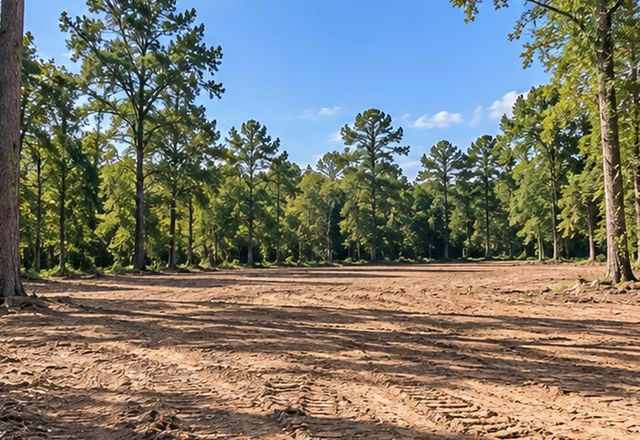 Full clearing
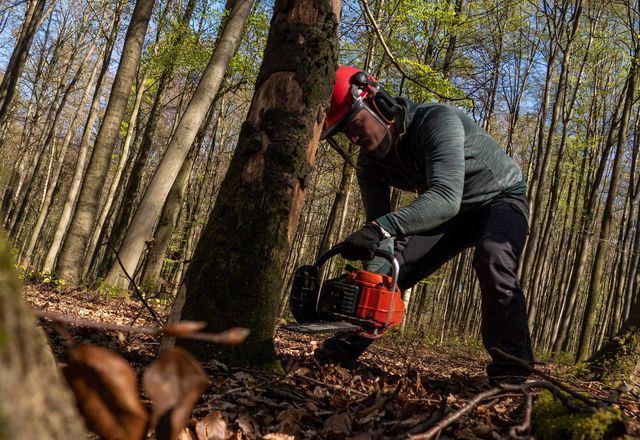 Selective clearing
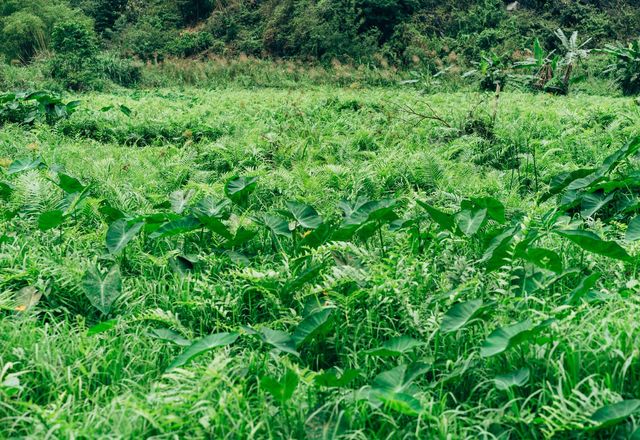 Brush clearing
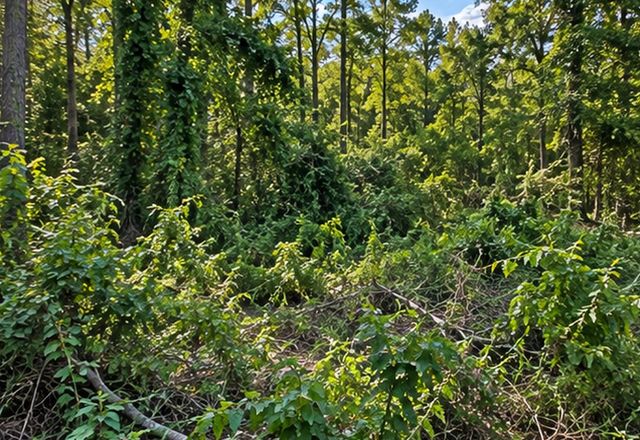 Lot clearing
| Type of Land Clearing | Primary Purpose | What’s Removed | What’s Typically Retained |
|---|---|---|---|
| Full land clearing | Open an area for development or another use | Trees and brush; stumps and roots if grubbing is included | Nothing above ground within the defined clearing area |
| Selective clearing | Remove unwanted vegetation while preserving selected trees | Marked trees, brush and undergrowth | Desirable trees and protected vegetation |
| Brush clearing | Remove overgrown vegetation | Brush, vines, weeds and small saplings | Mature trees and underground roots |
| Lot clearing | Prepare residential property | Vegetation within the construction and access areas | Trees and vegetation outside the clearing limits |
| Pasture clearing | Restore agricultural land | Encroaching brush, invasive vegetation and unwanted woody plants | Useful grasses and desirable vegetation where practical |
| Right-of-way clearing | Open corridors for access or utilities | Vegetation within a designated corridor | Vegetation outside the work area |
| Fence-line clearing | Clear existing or planned fence routes | Brush, saplings and obstructing trees | Vegetation beyond the fence corridor |
Full Land Clearing
Full land clearing removes most or all unwanted vegetation from a designated area.
It is commonly used for construction projects, new roads, agricultural conversion and development.
Depending on the agreement, full clearing may include stump extraction and grubbing, or those services may be priced separately.
A quote for full clearing should explicitly state whether underground roots and stumps will be removed.
Selective Land Clearing
Selective clearing removes specific trees and unwanted vegetation while preserving desirable trees.
It is commonly used on wooded residential properties, recreational land and sites where mature trees contribute to the property’s value.
Because operators must work around retained vegetation, selective clearing can require more careful planning and additional labor.
Brush Clearing
Brush clearing focuses on shrubs, undergrowth, vines, weeds and small trees.
Forestry mulchers, brush cutters and rotary mowers are commonly used.
Brush clearing can improve access, restore pasture and maintain previously cleared property without necessarily removing mature trees or disturbing the ground extensively.
Learn more about brush clearing methods and costs.
Residential Lot Clearing
Lot clearing prepares residential property for a house, driveway, utilities and related construction.
The required work depends on the building footprint, vegetation, soil conditions and proposed site design.
Lot clearing may involve tree removal, stump extraction, grubbing, excavation and grading.
Read our lot clearing guide for the process of preparing a residential property for construction.
Land Clearing Methods Compared
The most common land-clearing methods include forestry mulching, bulldozing, excavation, cut-and-grind clearing and manual vegetation removal.
Each method produces a different finished condition.
Forestry mulching is often appropriate for reducing brush and small trees while leaving roots in place. Excavation and grubbing are more suitable when stumps and underground vegetation need to be removed.
| Clearing Method | How It Works | Stumps and Roots | Material Left Behind | Soil Disturbance | Best Uses |
|---|---|---|---|---|---|
| Forestry mulching | A rotating mulching head cuts and shreds vegetation | Roots generally remain | Mulch spread across the ground | Generally low | Brush, saplings, trails, fence lines and pasture |
| Bulldozer clearing | A bulldozer pushes vegetation and can use attachments for grubbing | Can be removed with suitable equipment | Debris piles requiring disposal | Often high | Large clearing areas and construction preparation |
| Excavator clearing | An excavator lifts, pulls and separates vegetation and stumps | Can be removed | Logs, stumps and debris piles | Varies with the work | Tree and stump removal, difficult sites and selective clearing |
| Cut and grind | Trees are cut before stumps and debris are ground | Deep roots commonly remain | Wood chips and cut material | Usually localized | Residential lots and selective tree removal |
| Hand clearing | Workers use chainsaws, brush cutters and hand tools | Usually remain unless separately removed | Cut vegetation | Generally limited | Small areas and sensitive locations |
| Brush cutting | Rotary cutting equipment mows brush and smaller vegetation | Roots remain | Cut vegetation | Generally low | Fields, pastures and routine maintenance |
| Pile and burn | Previously cleared vegetation is collected and burned where permitted | Depends on the original clearing method | Ash and remaining residue | Depends on the clearing method | Debris disposal where burning is legally permitted |
Forestry Mulching
Forestry mulching uses a specialized cutting head to shred brush, saplings and suitable trees into smaller pieces.
The processed vegetation remains on the property as a mulch layer.
Because the material is processed in place, forestry mulching can reduce the need for hauling or burning debris.
Forestry mulching is often suitable for:
- Clearing overgrown pasture.
- Maintaining trails and access routes.
- Removing brush and saplings.
- Clearing fence lines.
- Selective vegetation management.
- Reducing certain types of surface and ladder fuels.
However, forestry mulching generally leaves underground root systems intact.
Some equipment can reduce exposed stumps close to ground level, but complete stump and root removal typically requires additional work.
Read our forestry mulching guide to understand the equipment, advantages, limitations and suitable projects.
Bulldozer Clearing
Bulldozers are commonly used to move vegetation, earth and debris across larger clearing areas.
With appropriate attachments, bulldozers can also assist with grubbing, root removal and debris piling.
This method can be effective when the project requires extensive vegetation removal and substantial site preparation.
However, bulldozing can disturb more soil than methods that process vegetation in place.
The resulting debris may also need to be hauled away, processed or burned where permitted.
Excavator Clearing
Excavators can remove trees and stumps by digging around roots, lifting material and separating debris.
Machines equipped with hydraulic thumbs or grapples can handle logs and vegetation more precisely.
Excavator clearing is useful when:
- Large trees or stumps must be removed.
- The work area has limited room.
- Individual trees must be preserved.
- Debris needs to be separated.
- Root removal is necessary before construction.
Excavators may also be used for the grading, trenching and earthwork that follow clearing.
Cut-and-Grind Clearing
Cut-and-grind clearing involves cutting trees and then grinding stumps or vegetation into smaller material.
It can be useful where large equipment cannot easily reach the site or when only certain trees need removing.
Grinding a stump below ground level does not necessarily remove the entire underground root system.
Manual and Selective Clearing
Manual clearing uses chainsaws, brush cutters and other handheld equipment.
It can provide greater control in smaller areas or around vegetation that must be preserved.
However, manually clearing extensive wooded property can be labor-intensive, time-consuming and hazardous.
Large trees, unstable limbs and difficult terrain should be handled by appropriately trained professionals.
Which Land Clearing Method Is Best?
The best method depends on the finished condition required.
For brush and smaller vegetation: Forestry mulching or brush cutting may be suitable.
For a wooded building site: Excavation, tree removal and grubbing may be necessary.
For preserving mature trees: Selective clearing is often preferable.
For pasture maintenance: Brush cutting or forestry mulching may be appropriate.
For complete construction preparation: Clearing may need to be followed by stump removal, excavation, grading and drainage work.
If you’re comparing methods, find local land clearing contractors who can assess the property and explain what their proposed work includes.
The Land Clearing Process: Step by Step
Land clearing usually begins with assessing the property and defining the work area.
The project then progresses through planning, vegetation removal, debris management and any required ground preparation.
Not every project needs every step.
Step 1: Assess the Property
Walk the property and identify the areas requiring clearing.
Mark property boundaries, trees to preserve, existing structures, access points, steep slopes and water features.
The assessment should identify vegetation density, tree sizes, ground conditions and equipment-access limitations.
Step 2: Choose the Clearing Method
Select a method based on the vegetation and intended use.
A pasture project may only require brush removal, while a residential construction project may need full grubbing and excavation.
Step 3: Check Permits and Utility Requirements
Determine whether tree-removal permits, development approvals, stormwater authorization or environmental restrictions apply.
Contact 811 before excavation or other covered digging activities.
Notice periods vary by state.
Step 4: Establish Equipment Access
Ensure the contractor can safely move machinery into and around the work area.
Access routes may need to accommodate equipment width, weight and ground conditions.
Step 5: Remove Trees and Vegetation
Carry out clearing using the selected machinery and methods.
Protect marked trees, structures and other features intended to remain.
Step 6: Remove or Treat Stumps and Roots
Grind, excavate or leave stumps according to the agreed project scope.
Construction projects may require more extensive root removal than pasture or vegetation-management projects.
Step 7: Manage Clearing Debris
Debris may be mulched, chipped, stockpiled, hauled away or burned where legally permitted.
The contractor should explain the disposal method before starting.
Step 8: Install Erosion Controls Where Required
Projects exposing substantial areas of soil may require measures to manage runoff and sediment.
Appropriate controls depend on the site and applicable regulations.
Step 9: Grade the Land if Necessary
Grading reshapes the surface for drainage, access and the next stage of development.
Not every clearing project requires grading.
Step 10: Stabilize Disturbed Ground
Depending on the intended use, exposed soil may need seeding, mulching or other stabilization.
This helps reduce erosion after clearing.
For additional DIY considerations and equipment options, read our how to clear land guide.
What Equipment Is Used for Land Clearing?
Land-clearing equipment includes bulldozers, excavators, forestry mulchers, compact track loaders, skid steers, stump grinders and rotary brush cutters.
Different machines are suited to different vegetation, terrain and project requirements.
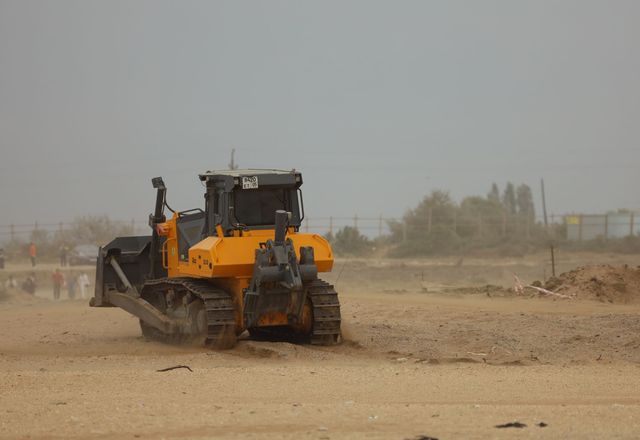 Bulldozer
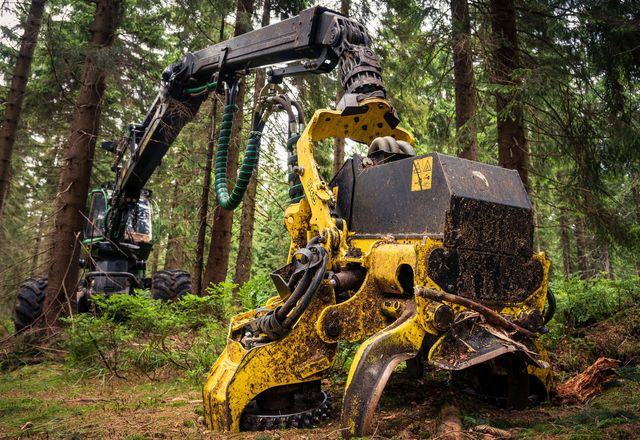 Forestry mulcher
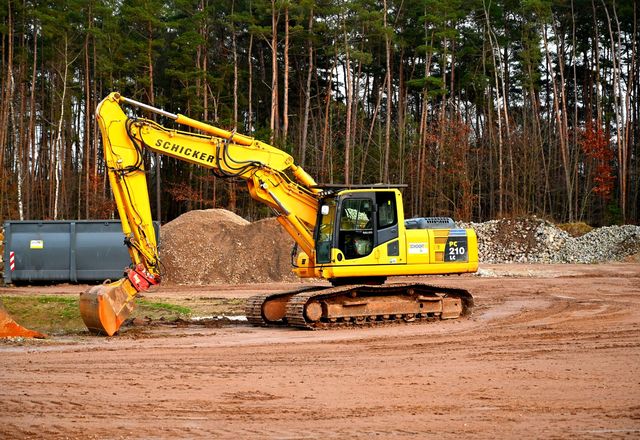 Excavator with thumb
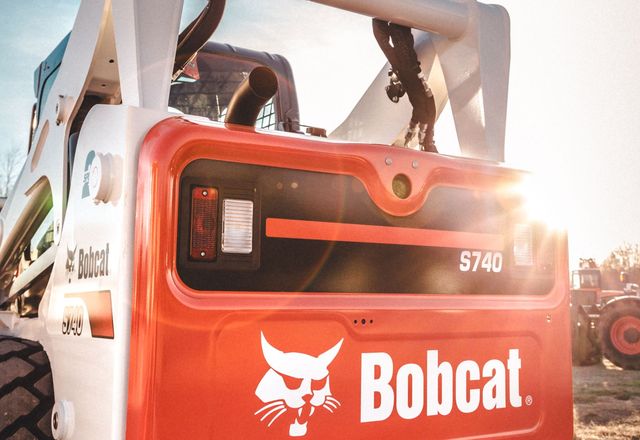 Compact track loader or skid steer
| Equipment | Primary Purpose | Common Applications |
|---|---|---|
| Bulldozer | Moving vegetation, debris and soil | Large clearing areas, grubbing and earthwork |
| Excavator | Digging, lifting and handling material | Tree removal, stump extraction and excavation |
| Forestry mulcher | Shredding vegetation in place | Brush, saplings, selective clearing and trails |
| Compact track loader | Carrying attachments on tracked undercarriage | Mulching, brush cutting and debris handling |
| Skid steer | Operating attachments in smaller work areas | Brush cutting, grappling and site cleanup |
| Stump grinder | Grinding stumps below the surface | Stump treatment after tree removal |
| Rotary brush cutter | Cutting vegetation using rotating blades | Pasture, fields and brush maintenance |
| Root rake | Gathering and separating roots and debris | Grubbing and site cleanup |
| Chainsaw | Cutting trees and branches | Selective and manual clearing |
Bulldozers vs Excavators
Bulldozers are designed primarily for pushing and moving material.
Excavators use an articulated boom and digging attachment to excavate, lift and handle material.
For land clearing, bulldozers are useful across broad areas, while excavators provide more control when removing individual trees, roots and stumps.
Skid Steers vs Dedicated Forestry Mulchers
Skid steers and compact track loaders can operate forestry mulching attachments when properly configured.
Dedicated forestry mulchers are purpose-built machines designed for vegetation processing.
Machine performance depends on power, hydraulic capacity, attachment design and vegetation conditions.
See our land clearing equipment guide for equipment types, rental considerations and suitable applications.
How Much Does Land Clearing Cost?
Land clearing can cost approximately $500–$8,000 per acre across published light-to-heavy clearing estimates, depending on vegetation density, clearing method, terrain and the work included.
These figures reflect different project scopes and should not be interpreted as a single uniform price range for identical work.
Angi reports a national average of approximately $3,780 per land-clearing project in its September 2026 cost guide, based on its published project dataset.
HomeGuide reports approximately $1,200–$8,000 per acre for different clearing conditions.
Per-project averages and per-acre estimates measure different things and should not be compared directly.
What Makes Land Clearing More Expensive?
Major cost factors include:
- Dense vegetation and larger trees.
- Stump and root removal.
- Rocky, steep or wet terrain.
- Difficult equipment access.
- Debris hauling and disposal.
- Permit and erosion-control requirements.
- Additional grading or excavation.
A brush-clearing job and a complete building-site clearing job may have substantially different prices even when both cover one acre.
For detailed estimates and comparison tables, read our land clearing cost per acre guide.
Is Forestry Mulching Cheaper Than Bulldozing?
Forestry mulching can be cheaper when the objective is reducing brush and suitable small trees without removing underground roots or hauling away debris.
However, comparing a mulching quote against complete grubbing can be misleading because the finished conditions differ.
Our forestry mulching cost guide explains published per-acre estimates, hourly rates and pricing factors.
Do You Need a Permit to Clear Land?
Land-clearing permit requirements depend on local tree regulations, the amount and purpose of soil disturbance, environmental conditions and the proposed land use.
There is no single nationwide permit that applies to every land-clearing project.
Common requirements can include:
- Tree-removal permits.
- Local clearing or development approvals.
- Grading permits.
- Construction stormwater authorization.
- Wetland-related permits.
- Burning restrictions.
- Protected habitat requirements.
Construction Stormwater Requirements
Under the federal construction stormwater permitting framework, construction-related land disturbance of one acre or more generally requires permit coverage.
Smaller projects may also require coverage when they form part of a larger common plan of development or sale disturbing at least one acre.
Clearing, grading and excavation can qualify as construction-related disturbance.
See the EPA’s construction stormwater guidance.
Wetlands and Waterways
Land-clearing work involving discharges of dredged or fill material into jurisdictional waters may require authorization under Section 404 of the Clean Water Act.
Not every wet area automatically qualifies as a jurisdictional water, and certain established activities may qualify for exemptions.
See the EPA Section 404 permit program.
Texas Land-Clearing Requirements
In Texas, the Texas Commission on Environmental Quality administers construction stormwater permitting.
Construction projects disturbing one acre or more generally require applicable coverage, and the common-plan exception can apply to smaller individual sites.
Local tree, development and burning rules may impose additional requirements.
For a complete explanation, read our land clearing permits guide.
What Happens to Trees, Stumps and Clearing Debris?
The treatment of trees, stumps and debris depends on the clearing method and the agreement with the contractor.
Land clearing does not automatically mean all vegetation, roots and debris will be removed from the property.
Forestry Mulching
A forestry mulcher processes vegetation into chips and leaves it on-site.
This reduces the need for separate debris hauling, although roots and some stumps typically remain.
Chipping
Branches and smaller woody material can be processed through a chipper.
The resulting chips may be retained, reused or removed.
Debris Hauling
Trees, logs, brush and stumps can be collected and transported away from the property.
Hauling requires additional equipment, transport and disposal arrangements.
Stockpiling
Cleared material may be collected in designated areas for later processing or removal.
The stockpile’s location and eventual disposal should be agreed before work begins.
Burning
Burning may be permitted for certain vegetation-clearing operations under applicable state and local rules.
However, fire restrictions, weather conditions and material limitations can prevent burning.
In Texas, consult the TCEQ outdoor-burning guidance and current Texas A&M Forest Service burn-ban information.
A contractor should clearly state which debris-management method is included in the quote.
When Is the Best Time of Year to Clear Land?
The best time to clear land is when ground conditions allow equipment to operate safely and the intended clearing and debris-disposal methods are permitted.
There is no single best season for every location.
Clearing Land in Spring
Spring clearing may be affected by wet ground, active vegetation growth and local environmental restrictions.
Heavy equipment operating on saturated soil can cause rutting and ground damage.
Clearing Land in Summer
Summer often provides drier operating conditions in some regions.
However, hot and dry weather can increase wildfire risk and lead to restrictions on outdoor burning.
Clearing Land in Autumn
Autumn can offer suitable clearing conditions in many regions, particularly when vegetation growth slows and the soil remains accessible.
Actual conditions matter more than the calendar.
Clearing Land in Winter
Winter clearing is possible in many areas.
Frozen ground can support heavy equipment under suitable conditions, although snow, ice and deep frost may create other challenges.
In warmer regions such as Texas, rainfall, soil saturation and burn restrictions are often more relevant than freezing conditions.
DIY Land Clearing vs Hiring a Contractor
DIY land clearing is generally best suited to small, accessible areas containing light brush and vegetation that can be handled safely with appropriate tools.
Professional contractors are usually better suited to larger or more complex projects.
| Project | DIY Suitability | Professional Contractor |
|---|---|---|
| Cutting light brush in a small area | Often practical with suitable equipment | Optional |
| Clearing small saplings | Depends on size, tools and experience | Useful |
| Removing mature trees | High-risk work | Recommended |
| Extracting large stumps | Usually requires specialized machinery | Recommended |
| Clearing several wooded acres | Often impractical for DIY | Recommended |
| Preparing a construction site | Requires careful planning and potentially multiple trades | Recommended |
| Clearing steep or difficult terrain | Increased safety and equipment risks | Recommended |
When Should You Hire a Land Clearing Contractor?
Consider hiring a contractor when:
- Mature trees must be removed.
- Stumps and underground roots require excavation.
- Heavy machinery is necessary.
- The property has steep slopes or difficult access.
- The work affects utilities, buildings or neighboring property.
- The project involves permits or environmental requirements.
- The cleared land must meet a defined construction-ready condition.
The contractor’s experience and equipment should match the actual work required.
How to Choose a Land Clearing Contractor
Before hiring, ask:
- What clearing method will you use?
- Which trees and vegetation will be removed?
- Are stump grinding and root removal included?
- What happens to the debris?
- Is grading included or quoted separately?
- What equipment will be brought to the site?
- Are mobilization and disposal charges included?
- Who is responsible for applicable permits?
- Do you carry appropriate insurance?
- What condition will the property be left in?
Obtain written quotes describing the same finished condition.
A low-priced brush-clearing quote and a higher-priced full-grubbing quote may represent completely different services.
Find Land Clearing Contractors Near You
Looking for a contractor to clear your property?
Our directory helps you find land-clearing companies serving your area and compare the services they advertise.
Find Land Clearing Contractors →
Browse contractors by state and city, review available company information and contact local providers about your project.
Frequently Asked Questions About Land Clearing
How Long Does It Take to Clear One Acre of Land?
Clearing one acre can take several hours to multiple days, depending on vegetation density, tree size, terrain and equipment. Angi publishes an estimate of approximately two to twelve hours per acre for certain clearing conditions. Heavily wooded land, difficult access and extensive stump removal can increase the time required.
What Is the Difference Between Land Clearing and Grubbing?
Land clearing removes trees, brush and other vegetation, while grubbing removes stumps and underground roots. Forestry mulching and brush cutting typically leave root systems in place. Construction projects may require both clearing and grubbing before excavation, grading or foundation work can begin.
Does Land Clearing Include Stump Removal?
Not always. Some contractors include stump removal, while others charge separately or leave stumps in place. Forestry mulching usually leaves underground roots intact. If you need a building site, confirm whether stump grinding, extraction and root removal are included in the written quote.
Is Forestry Mulching Better Than Bulldozing?
Forestry mulching is often preferable for brush removal, vegetation management and projects where limiting soil disturbance is important. Bulldozing with grubbing is better suited to certain projects requiring extensive stump and root removal. The best choice depends on the vegetation and the finished condition needed.
Can You Clear Land in Winter?
Yes. Land can be cleared in winter when weather, ground conditions and equipment access permit it. Frozen soil may support heavy machinery in some climates, while snow and ice can create additional difficulties. In warmer regions, rainfall and wet ground may have a greater effect on scheduling.
Can You Clear Land Without Heavy Equipment?
Small areas of light brush can sometimes be cleared using hand tools, chainsaws and brush cutters. However, removing large trees, stumps and extensive vegetation can require specialized machinery. Manual clearing of hazardous trees or difficult terrain should be left to appropriately trained professionals.
How Much Does It Cost to Clear an Acre of Land?
Published land-clearing estimates range from hundreds of dollars for light clearing to several thousand dollars per acre for dense vegetation and more extensive work. HomeGuide reports approximately $1,200–$8,000 per acre across different conditions. Actual costs depend on vegetation, terrain, accessibility, stump removal and disposal requirements.
See our land clearing cost guide for detailed published estimates.
Do You Need a Permit to Clear Land?
Permits depend on the property’s location, tree restrictions, construction-related soil disturbance and environmental conditions. Some brush-management work may not require a specific clearing permit, while protected tree removal, grading and work near regulated waters can require approval. Check local and state requirements before beginning.
What Is the Cheapest Way to Clear Land?
Brush cutting or forestry mulching may be economical when the goal is removing light vegetation without extracting stumps or hauling away debris. However, the cheapest initial method may not provide the finished condition required for construction. Compare the total cost of achieving the intended result, including any follow-up work.
Does Clearing Land Increase Property Value?
Land clearing can improve a property’s accessibility and usefulness, but it does not automatically increase market value. The effect depends on location, intended use, clearing costs and whether desirable trees or environmental features are preserved. Removing vegetation unnecessarily can reduce some properties’ appeal or create additional restoration costs.
Sources and References
The following sources support the definitions, published pricing estimates and regulatory information discussed in this guide.
| Source | Reference | Topic |
|---|---|---|
| USDA Natural Resources Conservation Service | Conservation Practice Standards | Land-clearing terminology and conservation practices |
| Angi | How Much Does It Cost to Clear Land? | Land-clearing pricing and project estimates |
| HomeGuide | Land Clearing Cost | Published per-acre estimates and clearing methods |
| US Environmental Protection Agency | Stormwater Discharges from Construction Activities | Construction-related land disturbance |
| Texas Commission on Environmental Quality | Construction Stormwater Permits | Texas construction stormwater requirements |
| US Environmental Protection Agency | Section 404 Permit Program | Wetlands and regulated discharges |
| Texas Commission on Environmental Quality | Burning Questions (GI-415) | Texas outdoor-burning requirements |
| Texas A&M Forest Service | Texas Burn Bans | County burn restrictions |
| Texas811 | Official Texas811 Website | Underground utility notification |
Last reviewed: October 16, 2026
LandClearingGuide provides general information about land-clearing methods, project costs and regulatory considerations. Actual prices, requirements and suitable techniques vary by property and location.