Reviewed
The cost of clearing land depends on how much vegetation needs removing, the size of the property, the equipment required and whether the project includes stump removal, debris disposal or grading.
Clearing one acre of light brush is considerably less involved than removing mature trees and preparing land for construction. Understanding these differences helps you estimate your budget and compare contractor quotes accurately.
How Much Does Land Clearing Cost Per Acre?
Land clearing costs vary according to vegetation density and the finished condition required.
The following table compares national estimates published by Angi and HomeGuide.
| Land Condition | Average Cost Per Acre | Source |
|---|---|---|
| Lightly forested land | $500–$2,000 | Angi, 2026 |
| Moderately vegetated land | $2,500–$4,500 | HomeGuide, 2025 |
| Densely forested land | $3,600–$5,600 | Angi, 2026 |
| Heavy land clearing | $4,500–$8,000 | HomeGuide, 2025 |
These are published national planning ranges, not statistically calculated averages for each category. Vegetation classifications and included services differ between publishers.
What Is the Average Cost to Clear Land?
According to Angi, the average land-clearing project costs $3,780, with most homeowners paying between $1,397 and $6,174.
This figure represents the average cost of an entire project rather than the average price per acre.
A small residential lot with several mature trees can cost more to clear than a larger property containing only grass and light brush.
For accurate budgeting, compare prices according to vegetation density, acreage and the work included instead of relying on one national project average.
Why Do Land Clearing Prices Vary So Much?
Two properties of the same size can require dramatically different amounts of work.
The main cost factors include:
- Vegetation density: Light brush takes less work to remove than densely wooded land.
- Tree size: Mature trees require additional cutting, handling and potentially stump extraction.
- Stump removal: Grinding or extracting stumps adds work beyond cutting vegetation.
- Terrain: Steep slopes, rocky ground and wet soil can slow equipment.
- Equipment access: Narrow entrances or poor access roads may require additional preparation.
- Debris disposal: Hauling away trees and brush can cost more than processing suitable material on-site.
- Grading: Preparing the ground for construction may require additional excavation and earthwork.
A contractor quoting $1,500 per acre for brush clearing may be offering a completely different service from one quoting $5,000 per acre for clearing and grubbing.
Land Clearing Cost by Property Size
Total land-clearing costs generally increase with acreage, although larger projects may qualify for lower per-acre rates.
Transporting heavy equipment creates mobilization expenses regardless of whether the contractor clears half an acre or several acres.
The following table shows Angi’s published planning estimates for different property sizes.
| Property Size | Lightly Forested | Densely Forested |
|---|---|---|
| ½ acre | $250–$1,000 | $1,800–$2,800 |
| 1 acre | $500–$2,000 | $3,600–$5,600 |
| 2 acres | $1,000–$4,000 | $7,200–$11,200 |
| 3 acres | $1,500–$6,000 | $10,800–$16,800 |
| 5 acres | $2,500–$10,000 | $18,000–$28,000 |
Source: Angi’s land-clearing cost guide, updated September 28, 2026. These figures are planning estimates rather than quotes for individual properties.
Small projects may cost more than simple per-acre calculations suggest because contractors often charge minimum equipment mobilization or operating fees.
How Much Does It Cost to Clear Half an Acre?
Clearing half an acre of lightly forested land may cost approximately $250–$1,000, according to Angi.
A densely wooded half-acre may cost $1,800–$2,800.
Actual prices can be higher when extensive stump removal, difficult access or debris hauling is required.
How Much Does It Cost to Clear One Acre?
Clearing one acre of lightly forested land typically costs $500–$2,000 in Angi’s published estimates.
For densely forested property, the estimated price increases to $3,600–$5,600.
HomeGuide reports prices reaching $8,000 per acre for heavy clearing.
The difference reflects vegetation density, tree sizes and the work included in the project.
How Much Does It Cost to Clear Two Acres?
Angi estimates that clearing two acres costs approximately:
- Lightly forested: $1,000–$4,000.
- Densely forested: $7,200–$11,200.
Larger projects may benefit from spreading equipment mobilization costs across more land.
However, difficult terrain, extensive stump removal and large quantities of debris can increase the total price.
How Much Does It Cost to Clear Five Acres?
Clearing five acres may cost approximately:
- Lightly forested: $2,500–$10,000.
- Densely forested: $18,000–$28,000.
These estimates are based on Angi’s published acreage pricing.
Five acres of scattered brush and small saplings may require significantly less work than five acres of mature woodland.
For larger properties, request a total project quote alongside any per-acre pricing.
Find Land Clearing Contractors Near You
National cost estimates provide a useful starting point, but local contractors can assess the vegetation, access and clearing requirements of your property.
Browse our directory to find land-clearing companies serving your area and compare the services they offer.
Find Land Clearing Contractors Near You →
Land Clearing Cost by Method
The clearing method affects both the price and the condition of the property afterward.
Forestry mulching processes vegetation into mulch, while bulldozing and excavation can remove stumps and roots when more extensive clearing is required.
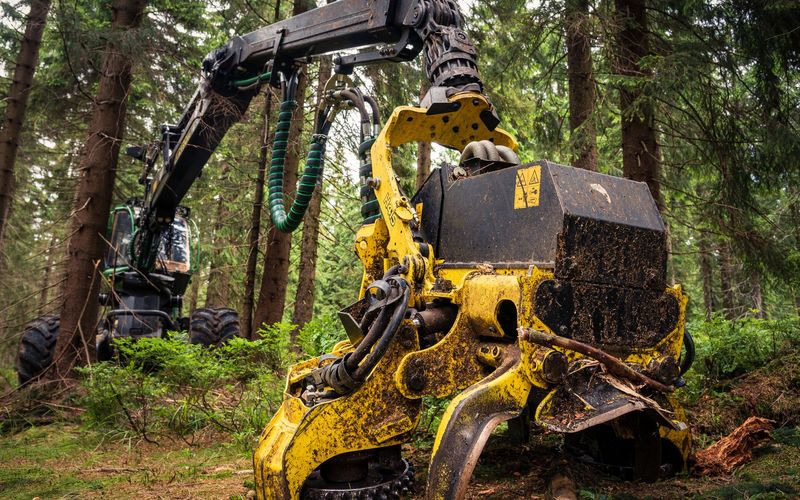 Forestry mulching
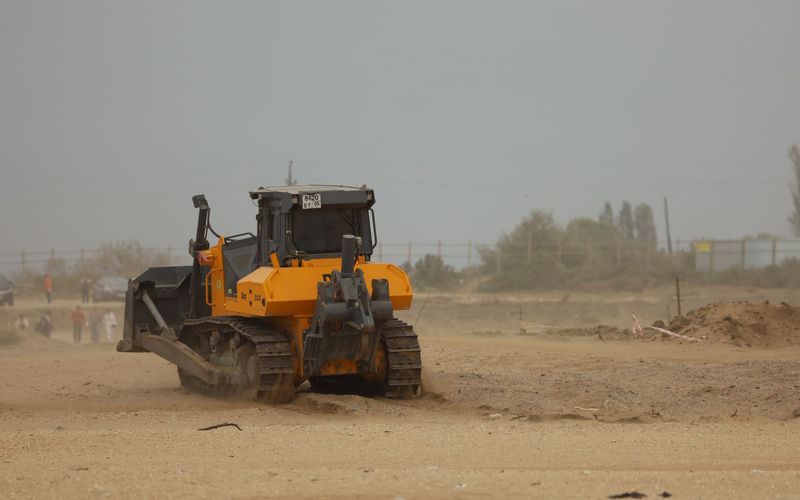 Bulldozer with grubbing
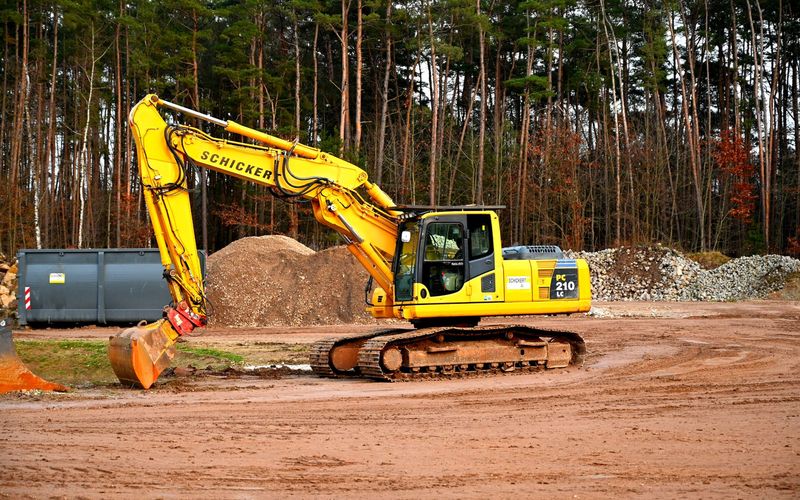 Excavator clearing
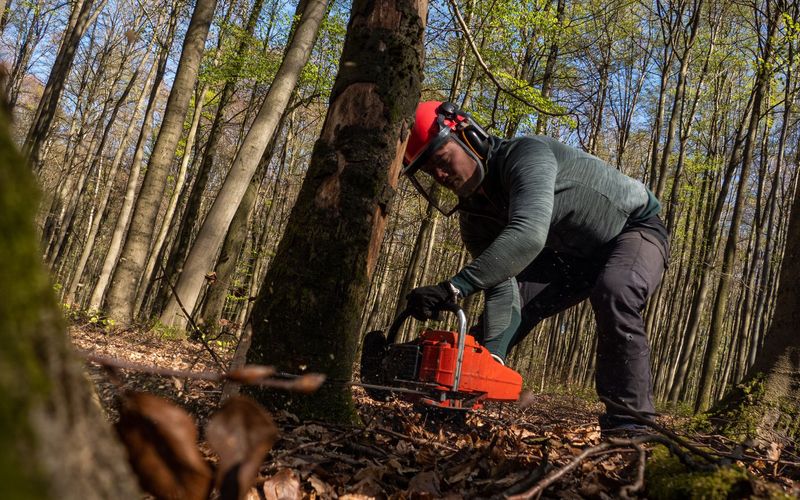 Cut and stump grind
| Clearing Method | Best For | Stumps and Roots | Material Left Behind |
|---|---|---|---|
| Forestry mulching | Brush, saplings, trails and pasture reclamation | Roots generally remain | Mulch spread across the ground |
| Bulldozer with grubbing | Large clearing areas and construction preparation | Can be removed | Debris piles unless separately disposed of |
| Excavator clearing | Large trees, stumps and selective removal | Can be removed | Logs, stumps and debris |
| Cut and stump grind | Smaller wooded lots and individual trees | Deep roots usually remain | Wood chips and cut material |
| Brush cutting | Grass, low brush and vegetation maintenance | Roots remain | Cut vegetation |
Forestry Mulching Cost Per Acre
Forestry mulching typically costs $400–$1,500 per acre, according to HomeAdvisor’s June 2026 cost guide.
HomeGuide reports approximately $400–$800 per acre for typical forestry mulching and estimates that high-density clearing can reach $2,000 per acre.
Forestry mulching uses specialized machinery to cut and shred suitable vegetation, leaving the processed material on the property.
Because the vegetation is mulched in place, this method can reduce the need for separate debris hauling or burning.
However, underground roots and some stumps generally remain.
For detailed pricing, see our forestry mulching cost per acre guide.
Bulldozer Land Clearing Costs
Bulldozers can push over vegetation, move debris and assist with stump and root removal when fitted with appropriate equipment.
Bulldozer clearing is commonly used for larger projects requiring extensive vegetation removal and earthwork.
Costs depend on tree size, machine requirements, operating time, terrain and whether debris disposal is included.
A quote for bulldozing with grubbing may cost more than a forestry mulching quote because it includes additional underground vegetation removal.
Excavator Land Clearing Costs
Excavators are used to remove trees, stumps and underground roots.
They can also separate logs, handle debris and perform additional earthwork.
Excavator clearing is particularly useful when individual trees need careful removal or when the project requires extensive stump extraction.
The cost depends on equipment size, project duration, accessibility and the work required.
Our excavation cost guide covers excavation pricing, equipment costs and common project types.
Brush Clearing Costs
Brush clearing focuses on smaller vegetation such as shrubs, vines, undergrowth and saplings.
It can involve rotary cutters, brush hogs, forestry mulchers or hand tools.
Brush clearing is generally less extensive than removing mature trees and underground roots.
However, published brush-clearing prices vary because the term describes different services.
For example, Angi publishes estimates as low as $20–$200 per acre for certain brush-removal work, while HomeGuide reports $800–$3,000 per acre for broader brush-clearing scopes.
Those figures should not be treated as equivalent services.
Read our brush clearing guide to compare methods and equipment.
Why Do Land Clearing Cost Estimates Disagree?
Published land-clearing estimates often disagree because they measure different project sizes, vegetation conditions and services.
Some publishers report average project costs, while others calculate cost per acre.
These measurements cannot be directly compared.
| Publisher | Published Estimate | Measurement | Pricing Context |
|---|---|---|---|
| Angi | $3,780 average; $1,397–$6,174 common range | Per project | Based on its reported dataset of 2,416 projects |
| Angi | $500–$5,600 | Per acre | Varies with vegetation density |
| HomeGuide | $1,200–$8,000 | Per acre | Covers different clearing conditions and project scopes |
Angi also displays a different per-acre summary range within its guide. Figures should be interpreted according to their individual labels rather than assumed to describe identical work.
Per-Project Costs vs Per-Acre Costs
A per-project average reflects the total cost of jobs of different sizes.
A per-acre estimate relates clearing expenses to the area treated.
Neither measurement establishes exactly which services are included unless the publisher defines the scope.
Clearing vs Grubbing
Land clearing generally involves cutting or removing trees, brush and other vegetation.
Grubbing removes stumps, roots and other underground vegetation.
A quote including grubbing covers more extensive work than one involving only cutting trees and brush.
Debris Removal and Grading
Some contractors leave logs, stumps or mulch on the property.
Others include hauling and disposal.
Grading is another separate service that reshapes the soil for drainage or construction.
The most useful estimate is the one that matches the finished condition required for your project.
What Affects Land Clearing Costs?
Several conditions determine how long the work takes, which equipment is needed and whether additional services are necessary.
Vegetation Density and Tree Size
Properties covered in light brush and small saplings can usually be cleared more quickly than densely wooded land.
Large trees require additional cutting, handling and potentially stump extraction.
Mature trees also create debris that must be processed or removed.
Terrain and Ground Conditions
Steep slopes, uneven terrain, rocky soil and wet ground can slow equipment.
Rocky conditions may increase wear on cutting machinery.
Wet soil can reduce traction and cause rutting, potentially requiring a different clearing method or schedule.
Property Access
Heavy equipment must be transported to the property and safely reach the clearing area.
Narrow gates, weak bridges, steep entrances and obstructed access roads can increase project costs.
Some properties require an access route to be established before clearing begins.
Stump and Root Removal
Stump grinding reduces visible stumps without necessarily extracting entire root systems.
Grubbing removes stumps and roots more extensively.
Construction projects often require additional root removal, particularly around foundations and other permanent improvements.
Debris Disposal
Cleared vegetation can be mulched, chipped, stockpiled, hauled away or burned where permitted.
Hauling adds transport and disposal expenses.
Burning may reduce disposal costs in appropriate circumstances, but local restrictions can prevent it.
Permit and Environmental Requirements
Some land-clearing projects require tree-removal permits, grading approval or environmental authorization.
Construction-related soil disturbance can also trigger stormwater permitting requirements.
Under the federal construction stormwater framework, projects disturbing one acre or more generally require permit coverage. Smaller projects can also require coverage when part of a larger common plan of development or sale.
See the EPA’s construction stormwater guidance.
For more information, read our land clearing permits guide.
What Should a Land Clearing Quote Include?
A land-clearing quote should specify the area being treated, vegetation to be removed, clearing method and finished condition.
Before comparing contractors, confirm the following.
| Item | What to Ask |
|---|---|
| Clearing area | How many acres or square feet are included? |
| Vegetation | Which trees, brush and plants will be removed? |
| Trees to preserve | How will retained trees be identified and protected? |
| Stumps | Will they be left, ground or extracted? |
| Roots | Is grubbing included? |
| Debris | Will material be mulched, chipped, hauled away or stockpiled? |
| Disposal fees | Are transport and disposal costs included? |
| Equipment | Which machines will be used? |
| Grading | Is rough or finish grading included? |
| Permits | Who obtains any necessary approvals? |
| Site protection | Are erosion controls and utility protection included? |
| Schedule | When will work begin and finish? |
| Final condition | What will the property look like when the work is complete? |
Why Written Scope Matters
Consider two contractors quoting to clear the same wooded acre.
The first proposes cutting the trees and leaving stumps and logs on the property.
The second proposes removing trees, extracting stumps, hauling away debris and rough grading.
Although both call their work land clearing, the quotes cover different services.
Before accepting a bid, make sure contractors are pricing the same finished condition.
Compare Local Land Clearing Contractors
Finding a contractor with the right equipment and experience is as important as comparing prices.
Browse our national directory to find companies serving your area and contact providers directly.
Browse Land Clearing Contractors →
Additional Costs After Land Clearing
Land clearing is frequently only the first stage of preparing property for construction or another use.
Additional work may include:
| Additional Service | Why It May Be Required |
|---|---|
| Stump grinding | Reduce remaining stumps below the surface |
| Grubbing | Remove underground roots and stump systems |
| Land grading | Establish suitable slopes and drainage |
| Excavation | Remove or relocate soil for construction |
| Drainage installation | Manage surface or underground water |
| Land surveying | Establish boundaries and project layout |
| Soil testing | Evaluate conditions for construction or wastewater systems |
| Permits and inspections | Comply with development requirements |
| Erosion controls | Manage runoff and disturbed soil |
| Debris hauling | Remove logs, stumps and vegetation |
These services aren’t automatically included in a basic land-clearing estimate.
For construction projects, our site preparation guide explains what happens after vegetation is removed.
Our land grading guide covers reshaping the ground for drainage and development.
How to Get an Accurate Land Clearing Estimate
National pricing provides a useful starting point, but the most reliable way to estimate your project is to describe the work clearly and obtain comparable local quotes.
Before contacting contractors, gather:
- Property location: Address or approximate location.
- Acreage: Total area requiring clearing.
- Vegetation: Brush, saplings, mature trees or mixed woodland.
- Tree sizes: Approximate trunk diameters where possible.
- Terrain: Slopes, rocks, wet areas or obstacles.
- Equipment access: Gates, roads, bridges and entrances.
- Required finish: Brush removal, tree clearing, stump extraction or grading.
- Debris preferences: Mulching, hauling or another legally permitted disposal method.
- Photographs: Images showing the vegetation and access points.
Ask contractors to quote the same scope.
A low initial price may not be the least expensive option if substantial additional work is required.
Find Land Clearing Contractors in Your Area
Ready to estimate your project?
Our contractor directory helps you browse land-clearing companies by state and city.
Compare available services, visit contractor profiles and contact local providers about your clearing requirements.
Find Land Clearing Contractors Near You →
Frequently Asked Questions About Land Clearing Costs
How Much Does It Cost to Clear One Acre of Land?
According to Angi’s 2026 estimates, clearing one acre costs approximately $500–$2,000 for lightly forested land and $3,600–$5,600 for densely forested land. HomeGuide reports prices reaching $8,000 per acre for heavy clearing. Actual costs depend on vegetation, terrain, access, stump removal and debris disposal.
How Much Does It Cost to Clear Half an Acre?
Angi estimates approximately $250–$1,000 for half an acre of lightly forested land and $1,800–$2,800 for densely forested land. Small projects may cost more than simple per-acre calculations suggest because contractors can charge minimum equipment mobilization or operating fees.
How Much Does It Cost to Clear Five Acres?
Clearing five acres may cost $2,500–$10,000 for lightly forested land or $18,000–$28,000 for densely forested land, according to Angi’s published estimates. Larger projects may benefit from lower per-acre rates, but difficult terrain, mature trees and extensive stump removal can increase the total.
How Long Does It Take to Clear One Acre?
Angi estimates that professional crews may clear an acre in approximately two to twelve hours under certain conditions. Dense woodland, difficult access, stump extraction and debris disposal can increase the time required.
Is Forestry Mulching Cheaper Than Bulldozing?
Forestry mulching can cost less when clearing brush and small trees without removing underground roots or hauling debris away. Bulldozing with grubbing involves more extensive stump and root removal. Compare prices according to the finished condition required rather than the headline per-acre rate.
Does Land Clearing Include Stump Removal?
Not always. Some contractors include stump grinding or extraction, while others price these services separately. Forestry mulching generally leaves underground roots intact. For construction projects, confirm whether complete stump and root removal is included.
Does Land Clearing Include Grading?
Land clearing and grading are separate services. Clearing removes vegetation, while grading reshapes soil for drainage, elevation and construction requirements. Some contractors offer both, but grading should be explicitly included in the written estimate.
Can You Clear Land Yourself?
Small areas of light brush may be manageable with appropriate tools and experience. Removing mature trees, large stumps and extensive vegetation can require specialized machinery and presents significant hazards. Equipment rental, transportation and disposal costs should be considered when comparing DIY clearing with professional services.
What Is the Cheapest Way to Clear Land?
Brush cutting or forestry mulching may be economical when the project doesn’t require complete stump extraction or debris hauling. However, a cheaper method may leave additional work before the land can be used as intended. Compare the total cost of achieving the required finished condition.
Do You Need a Permit to Clear Land?
Some projects require tree-removal permits, grading approvals, stormwater authorization or environmental permits. Requirements depend on location, vegetation, land use and the amount of soil disturbance. Check with the relevant local and state authorities before beginning work.
Sources and Pricing References
The following sources provide the published estimates and regulatory information referenced in this guide.
| Source | Resource | Information Used |
|---|---|---|
| Angi | How Much Does It Cost to Clear Land? | National clearing costs, acreage estimates and project averages |
| HomeGuide | Land Clearing Cost | National per-acre estimates and vegetation-density comparisons |
| HomeGuide | Forestry Mulching Cost | Forestry mulching prices |
| HomeAdvisor | Forestry Mulching Cost | Forestry mulching per-acre and hourly estimates |
| US Environmental Protection Agency | Stormwater Discharges From Construction Activities | Federal construction stormwater requirements |
Last reviewed: October 16, 2026
The prices in this guide are attributed third-party estimates, not quotes collected directly by LandClearingGuide. Actual land-clearing costs vary by location, vegetation, terrain, equipment and the services included.