Reviewed
For clearing light brush and maintaining pasture, a brush hog or rotary cutter may be sufficient. Dense woody vegetation and saplings are often better handled with a forestry mulcher, while mature trees, large stumps and construction preparation may require excavators or bulldozers.
The best land-clearing machine isn’t necessarily the largest or most powerful. It’s the equipment that safely achieves the finished condition your property requires.
This guide compares land-clearing machinery, equipment attachments, rental prices and the differences between buying, renting and hiring an operator.
What Equipment Is Used to Clear Land?
Land-clearing equipment ranges from handheld brush cutters to heavy excavators and bulldozers. The right machine depends on vegetation density, tree diameter, property size, terrain and whether underground roots must be removed.
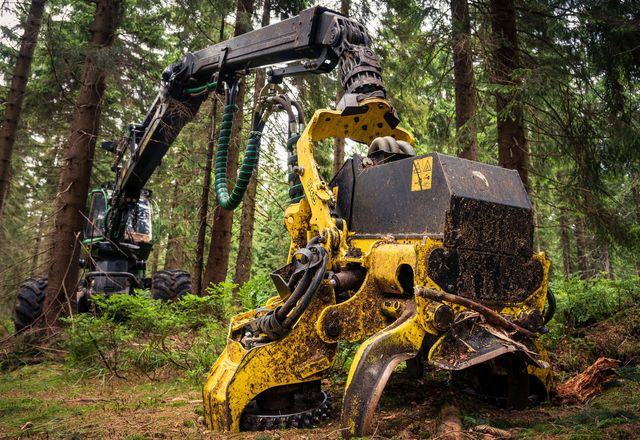 Forestry mulcher
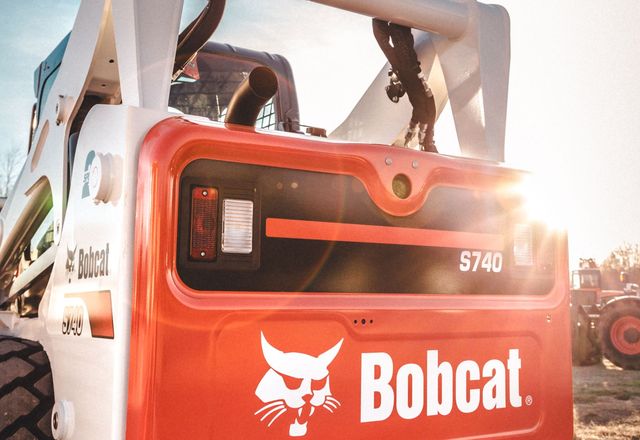 Skid steer / CTL
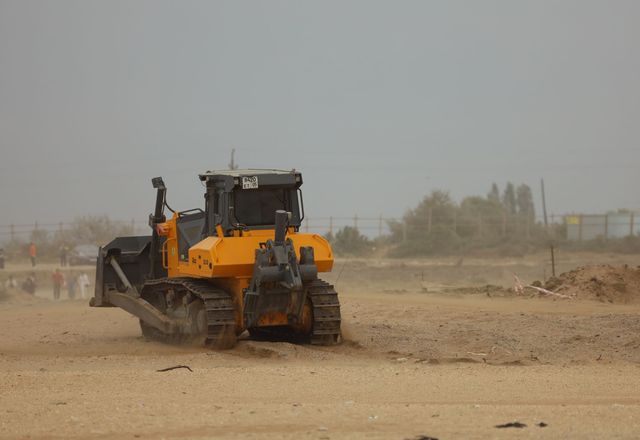 Bulldozer
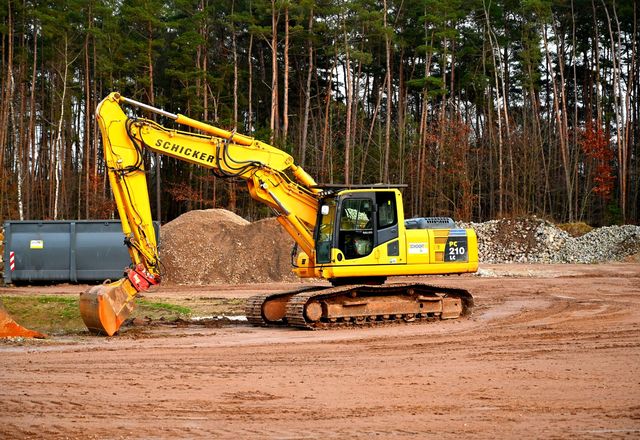 Excavator
| Equipment | Best For | What It Removes | What Remains |
|---|---|---|---|
| Forestry mulcher | Dense brush, saplings and suitable trees | Above-ground woody vegetation | Mulch and most underground roots |
| Brush hog | Grass, weeds and light brush | Low vegetation | Cut material and roots |
| Skid steer | Smaller clearing areas and attachment-based work | Depends on attachment | Varies |
| Compact track loader | Brush clearing and uneven ground | Depends on attachment | Varies |
| Bulldozer | Large clearing areas and earthmoving | Trees, brush and roots when equipped for grubbing | Debris piles and disturbed soil |
| Excavator | Trees, stumps and root extraction | Trees, stumps and underground vegetation | Debris requiring processing or removal |
| Stump grinder | Remaining stumps | Visible stump material to the specified depth | Chips and deeper roots |
| Root rake | Grubbing and debris collection | Roots and woody debris | Disturbed soil |
| Chainsaw | Selective tree cutting | Trees and branches | Stumps, logs and roots |
| Handheld brush cutter | Small areas of light vegetation | Weeds, brush and suitable smaller growth | Cut vegetation and roots |
Not every machine is suitable for every project.
For example, a forestry mulcher may efficiently clear overgrown pasture without removing stumps, while an excavator may be needed to extract underground roots before construction.
Forestry Mulchers: Best for Brush and Woody Vegetation
A forestry mulcher is a specialized machine or attachment that cuts and shreds brush, saplings and suitable trees into mulch left on the property.
Forestry mulching equipment is commonly used for:
- Clearing overgrown rural properties.
- Removing dense brush and saplings.
- Maintaining trails.
- Opening fence lines.
- Pasture reclamation.
- Selective woodland management.
- Vegetation reduction along access corridors.
Because vegetation is processed in place, forestry mulching can reduce the need for separate debris hauling.
However, it generally leaves underground roots intact.
Drum Mulchers
Drum mulchers use rotating cylindrical cutting heads fitted with teeth.
They can produce relatively fine mulch through repeated cutting and shredding, depending on the attachment and operating technique.
Drum mulchers are commonly used for woody vegetation management and selective clearing.
Disc Mulchers
Disc mulchers use a rotating disc with cutting teeth or blades.
They can process suitable woody stems efficiently, although the resulting material may be coarser than that produced by some drum configurations.
The actual finish depends on equipment and technique.
Skid Steer Forestry Mulchers
A skid steer or compact track loader equipped with an approved forestry mulching attachment can handle suitable brush, saplings and smaller trees.
The machine’s hydraulic capacity and attachment specifications determine what vegetation it can safely process.
Dedicated Forestry Mulchers
Dedicated forestry mulchers are purpose-built for vegetation-processing work.
They are often used on larger projects requiring sustained mulching operations.
Machine capabilities vary considerably, so there is no universal maximum tree diameter.
For a detailed breakdown, read our forestry mulching guide.
Brush Hogs and Rotary Cutters: Best for Light Vegetation
Brush hogs are heavy-duty rotary cutters commonly used to mow grass, weeds, light brush and suitable small woody growth.
They are particularly useful for:
- Pasture maintenance.
- Field clearing.
- Controlling regrowth.
- Maintaining open land.
- Cutting vegetation along accessible routes.
- Routine property maintenance.
A brush hog generally cuts vegetation rather than grinding it into fine mulch.
Underground roots remain intact.
Brush Hog vs Forestry Mulcher
| Feature | Brush Hog | Forestry Mulcher |
|---|---|---|
| Grass and weeds | Excellent | Capable but potentially excessive |
| Light brush | Often suitable | Suitable |
| Dense woody brush | Limited by cutter specifications | Often suitable |
| Saplings | Equipment-dependent | Often suitable |
| Mature trees | Generally unsuitable | Equipment-dependent |
| Stump removal | No | Limited surface reduction |
| Root removal | No | No |
| Finished material | Cut vegetation | Shredded mulch |
| Typical use | Pasture and field maintenance | Dense brush and woody vegetation |
A brush hog is often the more practical choice for maintaining relatively open land. Forestry mulching is usually better suited to dense woody vegetation.
See our brush clearing guide for additional equipment and clearing methods.
Skid Steers and Compact Track Loaders
Skid steers and compact track loaders are versatile machines that can perform land-clearing work using specialized attachments.
Their capabilities depend largely on the attachment fitted.
Common land-clearing attachments include:
- Forestry mulching heads.
- Rotary brush cutters.
- Grapples.
- Root rakes.
- Buckets.
- Stump-grinding attachments.
- Other manufacturer-approved vegetation-management equipment.
Can a Skid Steer Clear Trees?
Yes. A suitable skid steer with an approved forestry mulching or cutting attachment can process some brush, saplings and smaller trees.
However, skid steers are not automatically capable of handling mature trees.
Important factors include:
- Rated operating capacity.
- Hydraulic flow and pressure.
- Attachment compatibility.
- Tree diameter and species.
- Terrain and traction.
- Manufacturer operating limits.
- Operator experience.
Using an attachment outside the machine’s specifications can damage equipment and create serious safety hazards.
Skid Steer vs Compact Track Loader
Skid steers commonly use wheels, while compact track loaders use tracked undercarriages.
| Feature | Wheeled Skid Steer | Compact Track Loader |
|---|---|---|
| Undercarriage | Wheels | Tracks |
| Firm, improved surfaces | Often suitable | Suitable |
| Uneven ground | Depends on terrain | Often advantageous |
| Soft ground | May have traction limitations | Tracks may distribute weight more effectively |
| Maneuverability | Good on suitable surfaces | Good, terrain-dependent |
| Forestry mulching capability | Attachment-dependent | Attachment-dependent |
| Operating cost | Depends on machine | Tracks add maintenance considerations |
Neither machine is always superior.
The choice should reflect ground conditions, equipment specifications and the work required.
Bulldozers: Best for Large-Scale Clearing and Earthmoving
Bulldozers are heavy tracked machines commonly used to push vegetation, move earth and collect debris across larger clearing areas.
They can be useful for:
- Large land-clearing projects.
- Construction-site preparation.
- Moving vegetation and debris.
- Grubbing with suitable attachments.
- Creating access routes.
- Rough earthmoving.
- Preparing areas for grading.
Can a Bulldozer Remove Trees and Stumps?
A bulldozer can remove certain trees and stumps when appropriately equipped and operated.
Attachments such as root rakes can assist with grubbing and collecting woody debris.
However, pushing trees over is not automatically equivalent to complete stump and root removal.
The finished condition must be specified.
Advantages of Bulldozers
Bulldozers can move substantial quantities of material and work efficiently across suitable open areas.
They are also useful when vegetation removal is followed by earthmoving.
Disadvantages of Bulldozers
Bulldozers can disturb substantial amounts of soil.
They may also leave piles of trees, roots and debris requiring further processing or disposal.
For selective clearing around buildings or retained trees, other equipment may be more appropriate.
Excavators: Best for Trees, Stumps and Root Removal
Excavators are used to dig, lift and remove trees, stumps, roots and soil during land-clearing and site-preparation projects.
An excavator uses an articulated boom and attachment to handle material.
Common attachments include:
- Excavation buckets.
- Hydraulic thumbs.
- Grapples.
- Root rakes.
- Hydraulic breakers.
- Compatible mulching heads.
When Should You Use an Excavator for Land Clearing?
Excavators are useful when:
- Large stumps require extraction.
- Root systems must be removed.
- Individual trees need controlled handling.
- Debris must be separated.
- The site has limited working room.
- Excavation follows vegetation removal.
- Construction preparation requires earthwork.
Excavator vs Bulldozer for Land Clearing
| Feature | Excavator | Bulldozer |
|---|---|---|
| Main action | Digging, lifting and handling | Pushing and moving |
| Stump extraction | Well suited | Possible with appropriate equipment |
| Selective tree handling | Often better suited | Less selective |
| Large-area material pushing | Limited | Well suited |
| Excavation | Primary function | Limited |
| Debris sorting | Suitable with attachments | Less precise |
| Grading | Possible for certain work | Useful for rough grading |
Excavators are generally better suited to controlled digging and lifting, while bulldozers are better suited to pushing material across broader areas.
Some projects require both.
For pricing, see our excavation cost guide.
Stump Grinders and Root Rakes
Removing above-ground vegetation doesn’t necessarily remove stumps or underground roots.
Different equipment is used depending on whether the stump needs grinding or complete extraction.
Stump Grinders
A stump grinder uses a rotating cutting wheel to grind stump material below the surface.
The agreed grinding depth varies by project.
Stump grinding generally leaves deeper underground roots intact.
It may be suitable for landscaping or other projects where complete root extraction is unnecessary.
Root Rakes
Root rakes are attachments used with suitable heavy machinery to collect roots, stumps and woody debris.
They are commonly used during grubbing and cleanup operations.
Root raking can disturb the ground more extensively than vegetation cutting or mulching.
Stump Grinding vs Stump Removal
| Method | Result | Best For |
|---|---|---|
| Stump grinding | Reduces stump below the surface | Landscaping and surface clearing |
| Stump excavation | Extracts stump and root mass | Construction and complete removal |
| Root raking | Collects roots and woody debris | Grubbing and site cleanup |
| Forestry mulching | May reduce exposed stump material | Vegetation management |
For construction projects, confirm whether underground organic material must be removed before foundations, pavement or other improvements are built.
How Much Does Land Clearing Equipment Cost to Rent?
Forestry mulching equipment can cost approximately $1,200–$3,000 per day to rent, according to published estimates from Angi and HomeAdvisor. Hiring an excavator with an operator typically costs $100–$300 per hour, according to HomeGuide.
Equipment rental prices depend on machine size, attachments, rental duration, location and delivery requirements.
Land Clearing Equipment Rental and Hire Prices
| Equipment | Published Cost | Source |
|---|---|---|
| Skid steer with mulching attachment | $1,200–$3,000 per day | HomeAdvisor, June 2026 |
| Forestry mulcher rental | $1,200–$3,000 per day | Angi, July 2026 |
| Forestry mulcher with operator | $1,500–$5,000 per day | Hayden Outdoors, February 2026 |
| Bulldozer or excavator with operator | $1,200–$2,500 per day | Hayden Outdoors, February 2026 |
| Excavator with operator | $100–$300 per hour | HomeGuide, February 2026 |
| Forestry mulching attachment purchase | $1,700–$5,200 | HomeAdvisor, June 2026 |
Sources: HomeAdvisor, Angi, Hayden Outdoors and HomeGuide. These are published estimates, not quotes collected directly by LandClearingGuide. The listed attachment purchase range should not be interpreted as covering every commercial forestry mulcher attachment.
What’s Included in Equipment Rental?
A published daily rental rate doesn’t necessarily represent the complete cost.
Additional expenses may include:
- Equipment delivery: Transporting heavy machinery to and from the property.
- Attachments: Renting a mulching head, brush cutter, grapple or other equipment.
- Fuel: Operating costs during the rental period.
- Insurance and damage protection: Coverage required by the rental company.
- Minimum rental periods: Charges that apply even when the equipment is used for only part of a day.
- Wear and damage: Potential charges for excessive wear or equipment damage.
- Cleaning: Fees for returning equipment in unacceptable condition.
- Operator costs: Hiring a qualified operator if the rental does not include one.
Before renting, confirm the equipment specifications and all additional charges.
How Much Does It Cost to Rent a Forestry Mulcher for One Day?
Angi publishes a forestry mulcher rental estimate of $1,200–$3,000 per day.
The final price can depend on whether the rental includes the carrier machine, mulching attachment, delivery and other services.
Don’t assume a quoted attachment rental includes a compatible skid steer or compact track loader.
How Much Does It Cost to Hire an Excavator for a Day?
HomeGuide reports excavator and operator rates of $100–$300 per hour.
At those published rates, eight hours of operation calculates to $800–$2,400.
This is a basic hourly calculation, not an independently published daily rental quote.
Equipment mobilization, minimum charges and additional work may increase the final price.
For a more detailed breakdown of earthmoving costs, read our excavation cost guide.
Should You Buy, Rent or Hire Land Clearing Equipment?
Renting equipment can make sense for experienced operators with suitable projects, while hiring a contractor is often the more practical choice for extensive clearing, mature trees, difficult terrain and construction preparation.
Buying machinery is generally more appropriate when equipment will be used regularly enough to justify ownership expenses.
| Situation | Recommended Starting Point | Why |
|---|---|---|
| Small area of light brush | Existing suitable equipment or short rental | Limited work and simpler vegetation |
| Routine pasture maintenance | Consider ownership or periodic rental | Equipment may be needed repeatedly |
| Several acres of dense woody brush | Compare professional forestry mulching quotes | Specialist equipment and operating experience |
| Mature tree removal | Qualified tree-removal contractor | Significant safety and equipment requirements |
| Large stump extraction | Professional excavation contractor | Heavy machinery and controlled removal |
| Building-site preparation | Professional clearing and earthmoving contractor | Defined excavation, grading and soil requirements |
| Ongoing commercial vegetation management | Evaluate equipment ownership | Repeated use may justify capital investment |
When Does Renting Make Sense?
Equipment rental may be practical when:
- You already have suitable operating experience.
- The vegetation is within the machine’s capabilities.
- The project has safe and accessible terrain.
- You understand the required attachments.
- The work can realistically be completed within the rental period.
- Transportation and insurance costs are reasonable.
Renting equipment you don’t know how to operate can increase costs and create serious hazards.
When Is Hiring a Contractor Better?
Hiring a contractor is usually preferable when the work requires specialized machinery or experience.
Examples include:
- Clearing large wooded properties.
- Removing mature trees.
- Excavating extensive root systems.
- Operating on steep or rocky terrain.
- Working near structures or utilities.
- Preparing a site for construction.
- Handling substantial quantities of debris.
Professional contractors generally provide both machinery and operators, although the precise included services depend on the quote.
Is Buying Land Clearing Equipment Worth It?
Buying equipment may make financial sense for property owners or businesses performing regular vegetation management.
However, ownership costs extend beyond the purchase price.
Consider depreciation, maintenance, repairs, storage, transport, insurance, fuel and replacement parts.
For a single clearing project, purchasing heavy machinery is rarely the simplest option.
What Is the Best Equipment for Different Land Clearing Projects?
The best equipment depends on the result you want to achieve.
A forestry mulcher that works well for pasture reclamation may be insufficient for complete stump removal, while an excavator may be unnecessary for cutting low brush.
| Project | Equipment to Consider | Important Limitation |
|---|---|---|
| Clearing overgrown brush | Forestry mulcher | Underground roots remain |
| Maintaining pasture | Brush hog or rotary cutter | Woody plants may regrow |
| Clearing fence lines | Brush cutter or forestry mulcher | Access and vegetation size matter |
| Opening wooded trails | Forestry mulcher or selective cutting equipment | Stumps and rocks may remain |
| Removing large trees | Professional tree-removal equipment | Stumps may require separate treatment |
| Removing large stumps | Excavator or suitable stump grinder | Grinding doesn’t remove all roots |
| Clearing land for a house | Excavator, bulldozer and suitable clearing equipment | Additional grading and soil preparation |
| Preparing a building pad | Excavation and grading equipment | Engineering and compaction requirements |
| Selective clearing around mature trees | Suitable compact machinery and professional cutting equipment | Protecting retained trees and roots |
| Reclaiming agricultural land | Brush hog, forestry mulcher or suitable mechanical clearing equipment | Regrowth and follow-up management |
Best Machine for Clearing Brush
A brush hog may be sufficient for grass and lighter vegetation.
A forestry mulcher is often better suited to dense woody brush and saplings.
Best Machine for Clearing Trees
The best machine depends on tree size and the desired outcome.
Forestry mulchers can process suitable smaller trees, while mature trees may require professional felling and handling equipment.
Excavators can assist with stump and root extraction.
Best Machine for Removing Stumps
A stump grinder is suitable when the goal is reducing the stump below the surface.
An excavator is more appropriate when the entire stump and substantial root mass must be removed.
Best Machine for Preparing Land for a House
Residential construction sites may require several types of machinery.
Excavators and bulldozers can perform vegetation removal, grubbing and earthwork, while grading equipment helps establish the required elevations and drainage.
The project may also require additional soil preparation and compaction.
See our lot clearing guide and site preparation guide for the work involved before construction.
What to Check Before Renting Land Clearing Equipment
Before renting heavy machinery, confirm that the equipment is suitable for the property and the work.
Equipment Compatibility
For attachment-based machinery, check:
- Hydraulic flow and pressure requirements.
- Rated operating capacity.
- Attachment weight.
- Manufacturer-approved compatibility.
- Required guarding and safety equipment.
- Cutting-head capabilities.
- Machine stability and operating limits.
A forestry mulching attachment isn’t automatically compatible with every skid steer.
Property Conditions
Inspect the work area for:
- Steep slopes.
- Wet or unstable soil.
- Rocks and boulders.
- Buried metal or fencing.
- Large stumps.
- Restricted access.
- Overhead power lines.
- Underground utilities.
- Nearby buildings and structures.
These conditions can change which machine is suitable.
Permits and Underground Utilities
Some clearing projects require local permits or environmental approvals.
Contact 811 before excavation or other covered digging activities, following the applicable state notice requirements.
For additional information, read our land clearing permits guide.
Operator Training
Heavy land-clearing equipment can create serious hazards involving falling trees, unstable material, moving machinery and thrown debris.
Operators should be trained and follow manufacturer instructions.
Machinery should only be used with suitable guards, protective equipment and safe operating procedures.
Large trees, unstable limbs and hazardous sites should be handled by appropriately qualified professionals.
How to Choose a Land Clearing Equipment Operator
Hiring an operator with the right equipment can save time and avoid unnecessary work.
Before choosing a contractor, ask:
- What machine will you bring to the property?
- What attachments will be used?
- What vegetation sizes can the equipment handle?
- Will the machine remove stumps and underground roots?
- What will happen to the cleared vegetation?
- Can the equipment safely access the property?
- Are machinery transportation and mobilization included?
- Is pricing hourly, per acre or fixed for the project?
- Are additional clearing passes included?
- Will grading or other site preparation be necessary?
- What insurance coverage applies to the work?
- What condition will the property be left in when the project is complete?
The contractor’s answer should match your intended use for the land.
Don’t pay for complete clearing and grubbing if you only need pasture maintenance. Equally, don’t pay for brush cutting when the land needs to be ready for construction.
Find Land Clearing Equipment Operators Near You
You don’t need to own a bulldozer, forestry mulcher or excavator to clear your property.
Our national contractor directory helps you find businesses offering land clearing and related services in your area.
Browse local providers, compare the services they advertise and contact contractors directly about your project.
Find Land Clearing Contractors Near You →
For projects requiring substantial digging, stump extraction or earthmoving, explore our excavation contractor directory.
Frequently Asked Questions About Land Clearing Equipment
What Is the Best Machine for Clearing Land?
The best machine depends on vegetation and the required finish. Forestry mulchers are often suitable for brush and smaller trees, while bulldozers and excavators can handle more extensive clearing and stump removal. Brush hogs are useful for maintaining lighter vegetation. No single machine is best for every property.
Can a Skid Steer Clear Trees?
Yes. A skid steer or compact track loader fitted with a compatible forestry mulching attachment can process suitable small trees and woody vegetation. Its capabilities depend on hydraulic capacity, attachment specifications, tree diameter, terrain and operator experience. Large mature trees may require separate professional removal.
What Machine Removes Tree Stumps?
Stump grinders reduce stumps below the surface, while excavators can extract stumps and root masses. Root rakes can assist with grubbing and collecting woody debris. The correct equipment depends on whether the stump needs grinding or complete removal.
What Machine Is Best for Clearing Land to Build a House?
Excavators and bulldozers are commonly used for clearing residential construction sites because they can remove trees, stumps and roots when properly equipped. Additional grading, excavation and soil preparation may be required before construction. Forestry mulching alone usually doesn’t produce a construction-ready building pad.
Is a Bulldozer Better Than an Excavator for Land Clearing?
Bulldozers are better suited to pushing and moving material across broad areas. Excavators provide more controlled digging, lifting and stump extraction. The preferred machine depends on tree sizes, ground conditions, access and whether extensive grubbing is required.
What Is the Cheapest Equipment for Clearing Brush?
For accessible land with light vegetation, existing brush-cutting equipment or a suitable rotary mower may be more economical than renting a forestry mulcher. Dense woody brush and saplings may require specialized machinery. Compare the full cost of equipment, labor, fuel and disposal before selecting a method.
How Much Does It Cost to Rent a Forestry Mulcher?
Angi publishes forestry mulcher rental estimates of approximately $1,200–$3,000 per day. The total depends on equipment size, whether the carrier and attachment are included, delivery, insurance and rental terms. Professional operated mulching services may be more suitable for inexperienced users.
Can You Rent a Bulldozer to Clear Land?
Bulldozers are available through heavy-equipment rental companies, subject to their rental requirements. However, operating a bulldozer safely requires appropriate experience and training. For extensive tree clearing, grubbing or construction preparation, hiring an experienced operator may be the better option.
What Equipment Is Used for Forestry Mulching?
Forestry mulching equipment includes skid steers, compact track loaders, dedicated mulching machines and excavators fitted with compatible cutting heads. Drum and disc mulchers are two common attachment types. The best configuration depends on vegetation size, terrain and the finished result.
Can You Clear Land Without Heavy Equipment?
Small areas of light brush may be cleared using suitable hand tools and brush cutters. However, extensive wooded property, large trees and major stump extraction often require professional machinery. Manual methods are generally impractical for large-scale clearing and should not be used for hazardous tree removal.
Is It Cheaper to Rent Land Clearing Equipment or Hire a Contractor?
Renting may be economical for experienced operators completing manageable projects efficiently. However, transport, fuel, insurance, attachments and additional rental days can increase the cost. Hiring a contractor may be more economical for difficult terrain, dense vegetation or projects requiring specialized equipment.
Sources and Equipment Pricing References
The following sources provide the published equipment costs referenced in this guide.
| Source | Resource | Information Used |
|---|---|---|
| HomeAdvisor | How Much Does Forestry Mulching Cost? | Mulching equipment costs and published rental estimates |
| Angi | What Is Forestry Mulching? | Forestry mulching equipment, methods and rental costs |
| Hayden Outdoors | How to Clear Land | Equipment selection and operated-machine cost estimates |
| HomeGuide | How Much Does Excavation Cost? | Excavator and operator hourly rates |
| 811 | Call 811 Before You Dig | Underground utility notification |
Last reviewed: October 16, 2026
Equipment prices are attributed third-party estimates, not quotes collected directly by LandClearingGuide. Rental availability, equipment specifications, operating requirements and costs vary by location and supplier.